Category Archives: politics

The Countryside

I love walking. I like a good stroll. I like hiking, whatever a hike is. I like the ordnance survey app, although the most recent update has made it a little more annoying. And walking apps – I have a simple one, but some friends have watches that send info to their phones about heart rate, distance walked, incline, blood pressure, even sleep, maybe their dreams. One friend told me his app is like a psychoanalyst – in the morning the app says ‘last night you dreamt of making a city that looked like a huge pizza – click ‘more’ to see an interpretation, but before you do please watch this short advert from Dominoes.’

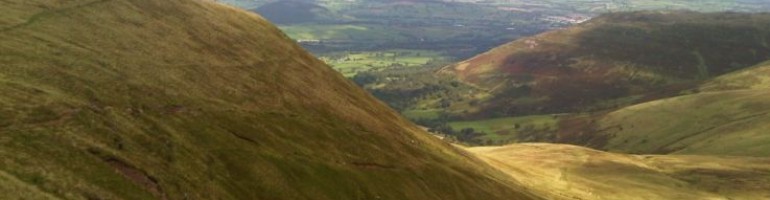
My walking app is simple, bog standard, dream analysis free. Bog standard which is apt because last week I walked through a bog. My walking app says I average 7 km a day. I walk and walk. Most of it up and down my kitchen as I wait for some package to be delivered. Or to the local Coop to buy some discounted salad. There are tens of thousands of footpaths across the UK, some rural communities have a spiders web of them, some crossing private gardens, others through fields full of curious cattle. Ah! The countryside, rolling hills, pastures, a shepherd watching over the flock, sparkling rivers. Harvest, all is safely gathered in. Winter, the snow drifts over the hillside, a lost sheep wanders through the white landscape. Spring, lambs gambolling in fields, and summer meadows, those summer meadows of yore, an explosion of wild flowers, butterflies, birdsong. This – of course – is all in the imagination, the nation’s imagination. The reality isn’t so good.

Something like 8% of England is accessible to the public. And that 8% is disappearing. But please note: every freedom of access we, in this country, have been granted, has been through an act of parliament passed by a Labour government. Land in Scotland and particularly, some Scandinavian countries are far more open. Try walking anywhere in the United States – you’ll probably end up shot. And, if your survive, you can then wonder why the USA is experiencing a growing obesity epidemic.

Because of cuts to local authority funding, footpaths have not been maintained. Some local authorities used to have footpaths officers, a job I once quite fancied. They are long gone. The right of way is still on the Ordnance Survey map, but the stile is overgrown with blackthorn. You cannot get through. Or there are bulls in a field. Here’s a statistic I want to drop in: 11% of Woking Local Authority’s land is devoted to golf. I could say more about golf. But that’s all for now. Who owns the land? And why do they own it? Why does anyone own anything? 36,000 landowners (0.06% of the population) own half of the rural land of England. And you can imagine, many of those landowners have inherited it through generations. Maybe from an ancestor who was a henchman of the King, a loyal sidekick prepared to slaughter some rebellious countryfolk. Or, indeed, their money came from slavery. But, hey ho, an Englishman’s home is his castle.

In the last fifty years the global populaton of farmed animals has tripled whle those in the wild have declined by two thirds. 96% of mammals worldwide are humans and farmed animals. Only 4% are wild. 70% of all birds are farmed poultry. And what is nature? How is anything natural? The hedgerows? The few trees left in the corner of a a farmyard? The acres of land devoted to fir plantations? Are we natural? Are computers and satellites natural? The English countryside is very different from the the landscape of Wales and Scotland – the Celtic nations are mountainous. The name of the most mountainous part of England, Cumbria, shares its etymology with Cymru, the Welsh word for Wales. Cymru, comrade, friend. The English word Wales, incidentally, comes from the Saxon for foreigner. The bloody cheek! The Anglo-Saxons, those invaders, swarmed across England, looked towards the mountains of what is now Wales and thought, well, that’s a dark ,impenetrable and hostile land. Let’s stick to these low pastures, this Saxon land, this Angle-Land. And let’s call them foreigners! Pastures of cattle graze this blessed plot, this England. The romantic poets, Wordsworth, particularly, Coleridge, how they banged on about the beauty of nature, as did the Romans and the Greeks, the pastoral poets, Virgil and Horace and the rest of them. They have fed into this myth of the countryside and by way of the public school curriculum and more recently the grammar and secondary school curriculum, many of us have been fed the same myth. It is there, in most of us, this myth of the countryside, of nature. Yes, there are still some areas that are protected – but those areas are declining, and now stand, according to a report back in 2024, at around 3%.(This came from the Wildlife and Countryside Link.) The English countryside is a factory. A livestock factory. So you can see fields of crops, remember this: half the calories produced by UK farmers go to feed livestock. And while we’re on the subject, 75% of the world’s soy is used to feed livestock. The destruction of the rain forest, the annihilation of species is for meat. Soy from Brazil feeds the hens that fill the chicken factories along the river Wye which, as I write, is the subject of the biggest environmental lawsuit ever – 4,000 people have signed up to a class action against poultry producers and water companies. 23 million chickens – a quarter of the UK’s poultry production, are raised in the river’s catchment area. I’ve used the word ‘raised’ – that’s not the right word for the way these birds are treated. They are not raised, they are industrially processed. 51% of UK land is inhabited by livestock. 51% of the UK is a factory for milk and meat. The English countryside, said JRR Tolkein has ‘good water, stones and elm trees and small quiet rivers’. Tolkein’s Lord of the Rings has fed into the myth, as have thousands of clones of his world.

I began this podcast after Brexit. I could feel myself becoming more and more unhappy about living in the UK. So I thought, no, I am going to celebrate what I love. Now look what’s happened. I’m berating the country again. I love it and I hate it, but I will not stand by and watch it destroyed. I think people are waking up to the degradation caused by intensive farming, by bird numbers plummeting because of lack of habitat. Last week I took a short walk to my local supermarket, the route follows a river. As well as the usual suspects – gulls, crows, pigeons, I saw egrets, herons, cormorants, wagtails and dippers. I see kingfishers, their blue splash of colour almost unworldly, and, as I like to tell anyone nearby, the Greek for kingfisher is halcyon. Halcyon days. So maybe, just maybe, just maybe….halcyon days will, one day, return.

Maybe.

(This is a transcription of the episode ‘The Countryside’ on my podcast ‘These Weird Isles’ – available on all platforms).

Comments Off on The Countryside

Filed under blogs, food, nature, podcast, politics, These Weird Isles, Wales, walking

What We Can Learn from Germany

Go into any bookshop in the UK and look in the German history section – the vast majority of books are related to World War Two – there is almost nothing on German post war reconstruction, or the origins of the state. Britain’s inability to see beyond the war has prevented us from learning from German success, and their achievements are, of course, very many. From the arts, the sciences, manufacturing, Germany is a world power: Adidas, Aldi, Audi, Bach, Beethoven, BMW, Bosch, Dr Martens, Einstein, Lidl, Mercedes, Porsche, the printing press, Puma, Wagner. Alexander Von Humboldt has more animals and places named after him than anyone else. Heard of him? Why not?

William Hershel discovered the planet Uranus from his back garden in Bath. I spend much of my time in that city and am struck by how few of the residents have heard of him or know there is a museum there dedicated to the man, his equally famous sister and their discoveries. Hershel, like Humboldt may be less than well known because they were German. And the British, particularly the English, have a bit of thing about Germans. (When England play Germany at football commentators always refer to the two countries having a rivalry, but I’m pretty sure it’s one way – the Germans don’t think about the English anything like as much.)

John Kampfner’s Why the Germans Do It Better is a great book with a terrible title. Kampfner is in awe of  the Germans, but not so much that the book avoids being critical.

If the Germans are more successful than the rest of Europe and particularly the UK it maybe because their economy is distributed, geographically and productively. 80% of Germany’s GDP comes from family businesses. And two thirds of these businesses are in places with fewer than 50,000 inhabitants. Compare this to the UK, where we are a predominantly service based economy. One astonishing fact exemplifies the difference between Germany and other major economies: Berlin is the only capital city where GDP per capita is lower than the rest of the country.

Germany was unified in 1871, before then it was made up of the states of the Holy Roman Empire, each with its own prince, or elector, its own identity. This maybe one origin of Germany’s more distributed economy. German unification came too late for any major colonial influence, the country did not grow rich on the proceeds of the slave trade. The Germans had to create their own wealth. Germany introduced compulsory education sixty years earlier than the UK and by the early 1800s had fifty universities compared to just Oxford and Cambridge in England. (Scotland was also ahead of England in this respect). The printing press was invented by Gutenberg in Mainz – in 1785 Germany circulated 1,225 periodicals and by 1913 more books were published annually in Germany (31,051 titles) than any other country in the world. In 1900 illiteracy was lower in Germany than France or the UK – all these factors led to the creation of an educated middle class, and in turn helped give rise to the family businesses that fuel the German economy. German law requires significant employee representation on the supervisory boards of large companies. Germany has many faults: its obsession with cars and coal, successive coalition governments that are often slow to act, huge, disastrous, infrastructure projects (the Tempelhof Airport) and a less than world class banking system. But if the UK (and particularly England) can learn from Germany then we must all put the past behind us and maybe think of the country as a friend rather than as a rival.

Comments Off on What We Can Learn from Germany

Filed under blogs, books, history, politics

Faust’s Metropolis

The Romans failed to conquer the lands inhabited by the Germanic tribes: in 9CE when an army led by Varus was ambushed in the Teutoberg forest, the Romans suffered one of the worst routs in their history. As the Roman Empire came to its end, these tribes began to occupy what was Roman territory, and the region evolved into a conglomeration of tiny states known as The Holy Roman Empire. The Empire lost almost half its population during the massacres of the Thirty Years War, and remained fragmented until 1871, when Bismarck, then President of Prussia, pursued a war against France, and in doing so, forced the empire into uniting. France was defeated and William I was crowned first Emperor of Germany in the Hall of Mirrors, Versailles. Prussia had become the most militarised state in the empire, and its capital, Berlin, became the capital of this new, mighty country.

Faust’s Metropolis is the history of the German capital. It is a huge book, 800 pages, but its subject is vast and complex. Berlin lies at the heart of Germany, and has been at the centre of a European nightmare which has its origins in Prussian militarisation. Berlin has been at the epicentre of two world wars, and almost a third. The Cold War, a stand off between opposing political systems, was epitomised by the division of Berlin, and, to a great extent, ended when border was opened in 1989, and the Wall subsequently destroyed.

As far as the English speaking world is concerned, the history of Germany, and particularly, Berlin, have been foreshadowed by those catastrophic events. In most bookshops at least three quarters of any section on German history will be devoted to Hitler, the Nazis and World War One.

When Napoleon conquered Germany, he stood before the tomb of Frederick the Great in Berlin. ‘Hats off gentlemen,’ he said, ‘if he were still alive, we would not be here.’  There is no doubt that Versailles was chosen for the coronation of the first German emperor, William I, as revenge for the Napoleonic wars. The reparations set out in that treaty of 1919, ending World War One, signed in Versailles, had a significant role in the rise of the Nazis. After the invasion of France, Hitler stood before Napoleon’s mausoleum, creating a sinister symmetry with Napoleon’s tribute to Frederick. He said it was the ‘greatest moment’ of his life.

In the closing months of World War Two, Stalin’s armies swept through the Berlin, committing atrocious acts, murdering and raping, taking revenge, as they would say, for the failed Nazi invasion of their country. The city was divided, the Wall built.

Berlin has been occupied by the French, the Russians, the Americans and the British.  It has been the home of Hegel, the Bauhaus, Einstein, German Dada, Brecht. Alexander Von Humboldt, an intellectual giant, born and died in Berlin, he was a scientist, explorer, mapmaker, yet his achievements remain relatively unknown in the English speaking world, probably because of wars that began and ended long after he died.

In the early 1700s the city welcomed immigrants from Denmark, Sweden, France and Scotland. There were an eccentric series of monarchs: Frederick William the First who appointed a jester to replace Leibniz in the Academy of Science, and who called intellectuals ‘dogfood’. He disguised himself as commoner and wandered the city, physically attacking those he saw as idlers. He conscripted taller men for his ‘giant grenadiers’ and made them march through his rooms. Frederick the Second, perhaps the most famous Prussian king, better known as Frederick the Great, was a tormented, bullied young man. He was an accomplished flautist, Bach wrote ‘A Musical Offering’ based on a theme he composed.  Voltaire, despite being a friend of Frederick, said of Berlin it had ‘too many bayonets and not enough books.’ Indeed, Berlin, as the capital of Prussia, was at the heart of a militarisation that would spill over into the twentieth century. For many years Berlin was like a garrison town, and its citizens in awe of the military. Berliners deference to authority is beautifully encapsulated in the story of Wilhelm Voigt, an unemployed shoemaker, who, masquerading as a Prussian officer, ordered a company of troops to accompany him to the city treasury, where he was handed 4000 marks, an enormous sum at the time. He was jailed for two years, but eventually pardoned by the Kaiser, and is now something of a folk hero, a statue of him still stands, perhaps reminding Berliners that their once great reverence for authority had grave consequences for the world.

The city was completely destroyed in World War Two, very little of the past remains. More bombs were dropped on the city than on the entire United Kingdom. Most buildings from the Nazi era, and from the German Democratic Republic, have gone; the Wall has more or less disappeared. In Faust’s Metropolis, Alexandra Richie’s galvanising study, the city is conjured before our eyes, rebuilt layer upon layer, rises from the dust.


Leave a Comment

Filed under blogs, books, history, politics